
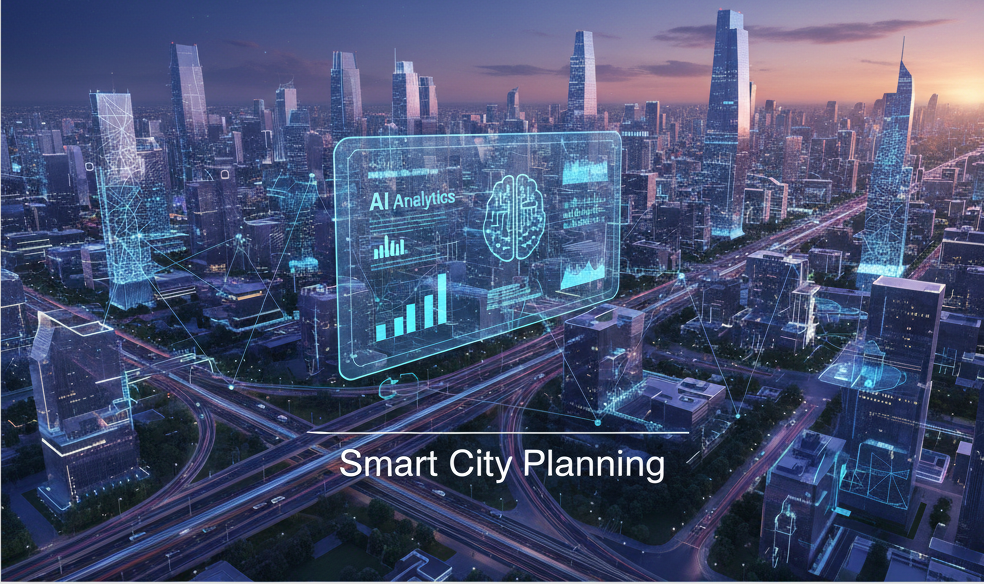


Generate, validate, and compare smart city development scenarios with integrated spatial analytics — replacing fragmented GIS workflows with data-driven planning.
Smart city planning requires integrating data from multiple systems — mobility, energy, land use, demographics — that are managed in separate tools. Fragmented workflows create late-stage feasibility surprises and slow stakeholder alignment, delaying investment decisions and planning approvals that cities cannot afford to miss.
| Without DBF | With DBF |
|---|---|
Smart city KPIs modelled across disconnected GIS and planning tools |
Single integrated workflow from spatial data to KPI validation |
Limited scenario options slow stakeholder alignment |
50+ smart city scenarios generated and compared in parallel |
Sustainability targets bolted on after spatial planning |
Sustainability and liveability KPIs built in from the first iteration |
Investment decisions made without validated spatial evidence |
Traceable, comparable outputs ready for authority and investor reporting |
Upload site boundaries, GIS data, demographic datasets, and planning policy constraints. DBF integrates multi-source data into a single spatial model.
AI generates 50+ development scenarios — each scored against planning, liveability, sustainability, and infrastructure KPIs simultaneously.
Every land use configuration, density gradient, and infrastructure relationship is evaluated. Conflicts and opportunities surface with spatial evidence.
Scenarios are automatically scored against liveability, sustainability, infrastructure capacity, and planning policy compliance.
Comparable scenario outputs ready for planning authority, investor, and community stakeholder review from day one — not after weeks of consultant work.
Planning-authority-ready evidence outputs and spatial data exports delivered from the feasibility stage — not the planning application stage.
Every DBF capability is designed for the specific demands of smart city planning — where mobility, energy, land use, and demographics interact across city-scale spatial scenarios.
Validate smart city development scenarios against planning policy, infrastructure capacity, and liveability targets before planning applications are submitted.
Test mixed-use smart city configurations against infrastructure investment, sustainability KPIs, and investor return targets before capital is committed.
Assess smart city policy scenarios against economic development targets, infrastructure capacity, and demographic demand forecasts simultaneously.
Deliver faster, more evidence-based smart city feasibility with validated spatial scenarios, KPI scoring, and planning-authority-ready outputs.
As urbanisation accelerates and smart city investment grows globally, the demand for data-driven urban scenario validation will become a planning requirement. Cities that plan with spatial evidence will attract investment and deliver better outcomes faster. DBF enables planners to move from reactive zoning management to proactive, evidence-based urban strategy — validating and communicating smart city scenarios with the speed and rigour that modern city development demands.