
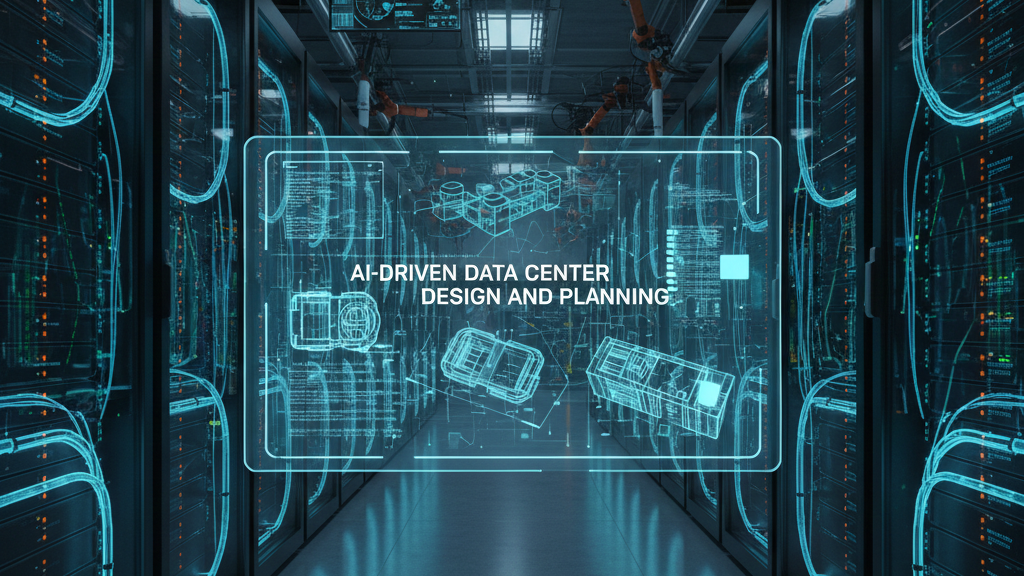
Validate power density, cooling infrastructure, and modular growth scenarios for data centre campuses — before committing to capital-intensive construction.
Data centre planning errors — undersized power, misaligned cooling, or inflexible modular growth — are among the most expensive infrastructure mistakes to correct after construction begins. A single undersized cooling zone can compromise an entire data hall's operational performance for the lifetime of the asset.
| Without DBF | With DBF |
|---|---|
Power density and cooling requirements estimated in spreadsheets |
AI generates and scores 100+ data hall configurations against power and cooling briefs |
Infrastructure conflicts found during detailed engineering |
Every MEP and cooling requirement validated before design begins |
Modular growth assumed without spatial testing |
Phased capacity growth scenarios tested against site and infrastructure limits |
Sustainability targets addressed late |
PUE and embodied carbon metrics integrated from feasibility |
Upload site constraints, programme brief, and enrolment or occupancy targets. DBF maps requirements to spatial parameters automatically.
The AI generates 100+ layout configurations, each scored against GFA, efficiency, programme mix, and brief compliance.
Every departmental relationship is evaluated against the brief. Conflicts surface with impact scores before any design work begins.
Utilities, MEP, and specialist infrastructure demands are modelled from the validated programme — not estimated.
Growth and expansion scenarios are tested against site and infrastructure limits to confirm long-term scalability before massing.
Validated programme data and spatial models export directly into your BIM workflow, eliminating manual re-entry.
Every DBF capability is designed for the specific demands of data centre planning — where power density, cooling infrastructure, and modular growth interact at the scale of billion-pound capital decisions.
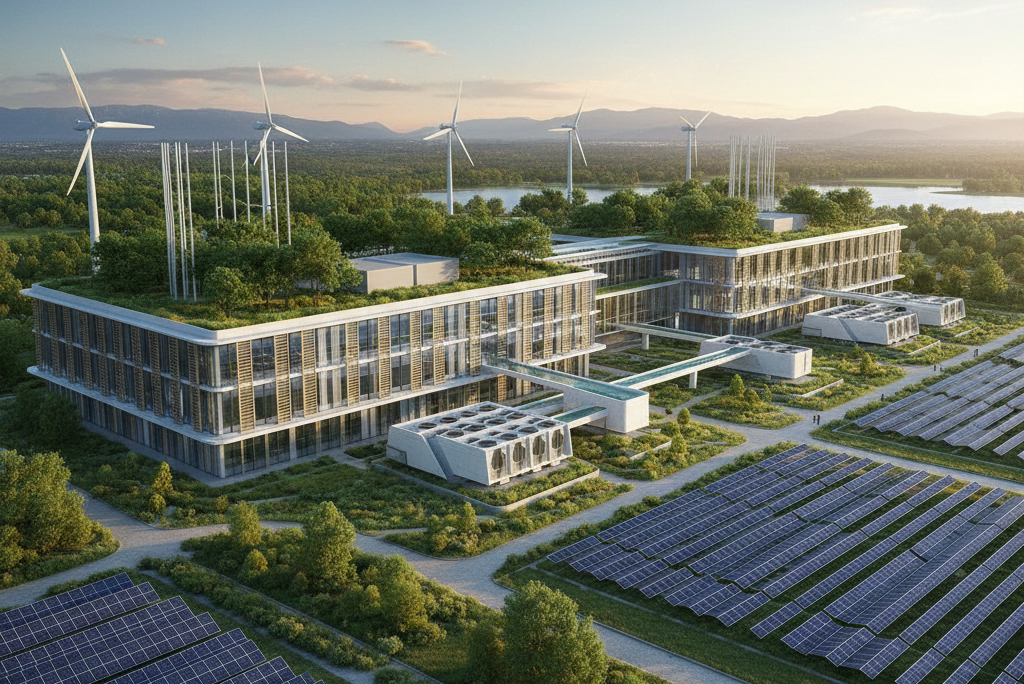
Validate campus-scale data hall configurations against power density requirements, cooling infrastructure limits, and phased capacity growth targets before construction.
Test multi-tenant data hall layouts against PUE targets, power redundancy requirements, and modular expansion scenarios before committing to design.
Validate on-premise data centre configurations against IT load requirements, cooling demands, and long-term capacity growth before capital is committed.
Assess data centre development scenarios against infrastructure investment, operational efficiency, and long-term capacity scalability before committing capital.
As AI compute demand and cloud infrastructure investment accelerate globally, data centre planning complexity will intensify. Power densities will increase, cooling requirements will evolve, and the cost of planning errors will scale with asset values. DBF provides the AI feasibility platform to validate power, cooling, and spatial configurations before capital is committed — enabling data centre developers and operators to plan with greater confidence at every scale.